

Skeleton Design, Sequence Generation
Structural Prediction and Screening
Online message

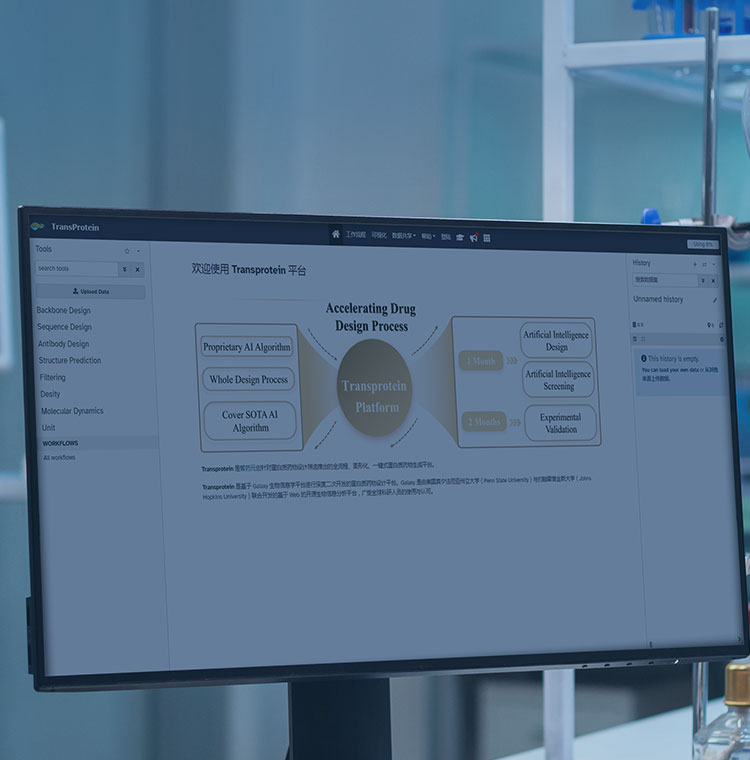
TransProtein is an independently developed graphical AI protein design platform that integrates core algorithms such as GPDL backbone design, GPD sequence generation, and IDPFold dynamic structure prediction, covering de novo design and targeted modification of peptide drugs, antigens and antibodies, and industrial enzymes. The platform supports graphical drag-and-drop operation and one-click automated workflows, allowing users to complete the entire virtual screening process from structure generation and sequence design to functional prediction without writing code. It is also compatible with mainstream international methods such as ESMFold, providing flexible, efficient, and scalable protein engineering solutions for R&D teams with varying experience levels.
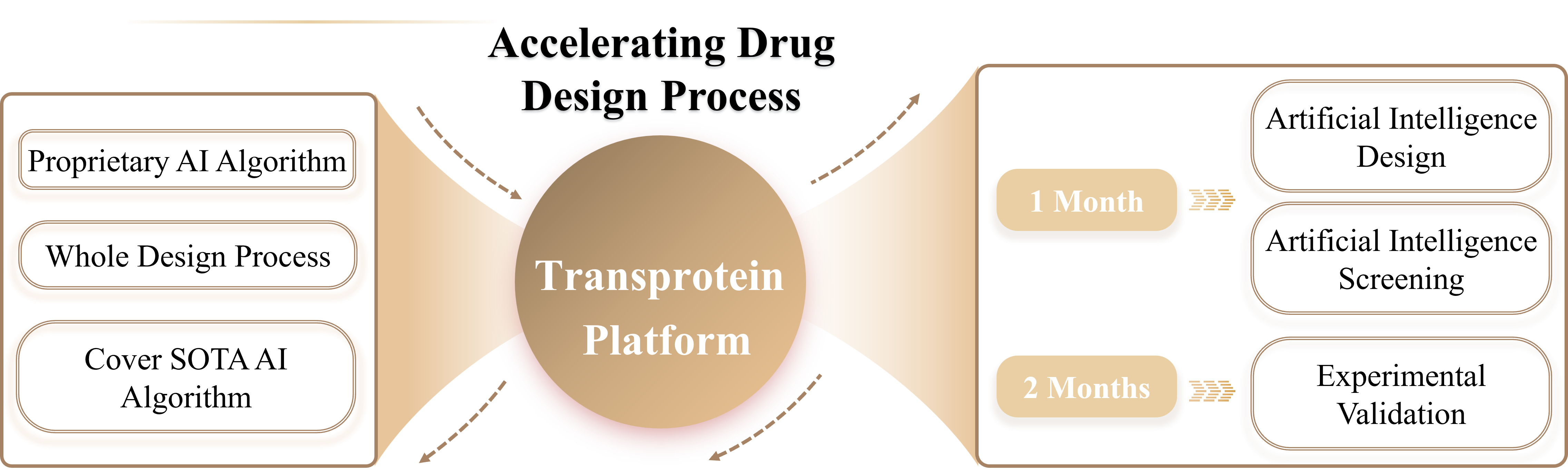
Relying on its self-developed algorithm matrix, the platform can complete the design and virtual screening of tens of thousands of sequences in about two weeks, reducing the preclinical development cycle of protein drugs from the traditional four years to 12–18 months.


TransMolecule is a full-process computational platform for small molecule drug development, covering a complete digital chain including virtual screening and lead compound optimization. The platform integrates modules such as a large-scale compound database, molecular docking, similar molecule generation, and ADMET prediction, enabling researchers to quickly identify highly active and druggable small molecule candidate compounds.
It is suitable for scenarios such as target validation, lead compound screening, scaffold transition and multi-parameter optimization of lead compounds.



TransCyclicPeptide is a specialized design module for the development of cyclic peptide drugs. Based on a self-developed underlying algorithm architecture, it integrates exclusive functions such as cyclic peptide backbone generation, cyclization site prediction, and membrane permeability assessment.
The platform covers the entire process from linear peptide precursor generation and cyclization reaction design to conformational stability analysis, supports the modification of natural cyclic peptides and the de novo design of novel cyclic peptides, and provides efficient computational support for the development of oral peptide drugs and targeted delivery systems.
Online message
 WeChat Official Account
 WeChat Customer Service